The Golden Age of Mercenaries
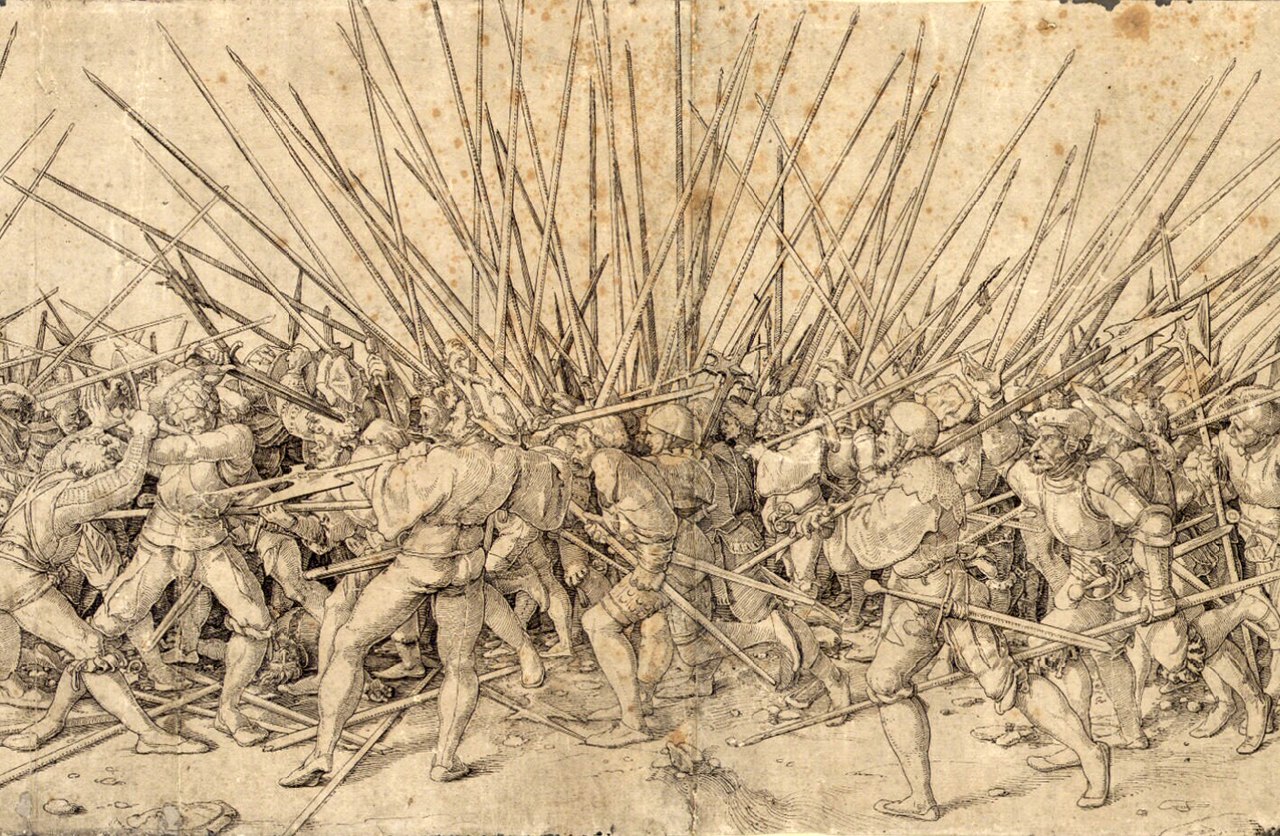
If there was a ever a time to be a mercenary, it was Renaissance Italy. The condottieri, or “contractors” were masters of the art: skilled at fighting, certainly, but also the art of waging war for profit, and living long enough to enjoy your rewards.
While the Italians embraced the system most fully - for a time, practically all of the Italian city states outsourced their military operations to privatized contrators - contractors were common throughout Europe in this period. These ranged from the famed Swiss pikemen, whose descendants still guard Leo XIV as we speak, to a range of French, German, and English mercenary outfits, what Fritz Redlich calls “military entrepreneurs”.
This golden age of mercenary fighting falls in a transition period between the medieval and modern eras. Under a feudal system, elites have access to the resources and power of the land. Because of the limitations of information flow, organization, and control, this is subdivided out to local lords. Particulars varied, but across the world, local lords were responsible for maintaining their fiefs, handling administration, policing, and taxation. When the state needed military power, each lord was responsible for supplying it out of their own human and material resources.
By the height of modernity, this system has been fully replaced by the tax-collecting administrative state. With the power of improved transport, communication, and control, the state can collect taxes from the countryside and individual citizens far more effectively and directly, in the form of hard currency rather than grains. When necessary, those tax revenues can be borrowed against, financial instruments backed by the full faith and credit of the state. The treasury then funds military power, recruited, equipped, and deployed by the state itself.
Redlich argues that the mercenary era falls between these two systems: an era where the feudal power structures were beginning to crumble, as technological change and monetization crept into the cracks like acid rain. At the same time, modern systems of social control, and taxation, and the technologies of transport and communication that make up their substrate, barely existed. The financial options for the pre-Westphalian states were extremely limited. This created opportunities, then, for entrepreneurs. Unlike feudal lords, whose power comes from ties of obligation and loyalty, these men get their power through their creditworthiness: the combination of military skill, experience, and reputation that makes for a good investment.
The post-Cold War boom of private military activity has a rather different financial structure: instead of creditworthiness, which the modern state has in limitless supply, private military companies fill other gaps: flexibility, deniability, and silence, dying anonymously without the attention of casualty-averse media. It remains to be seen if we’re living through another golden age, but any time the supply or demand of mercenaries is going up, you’re likely to be living through interesting times.